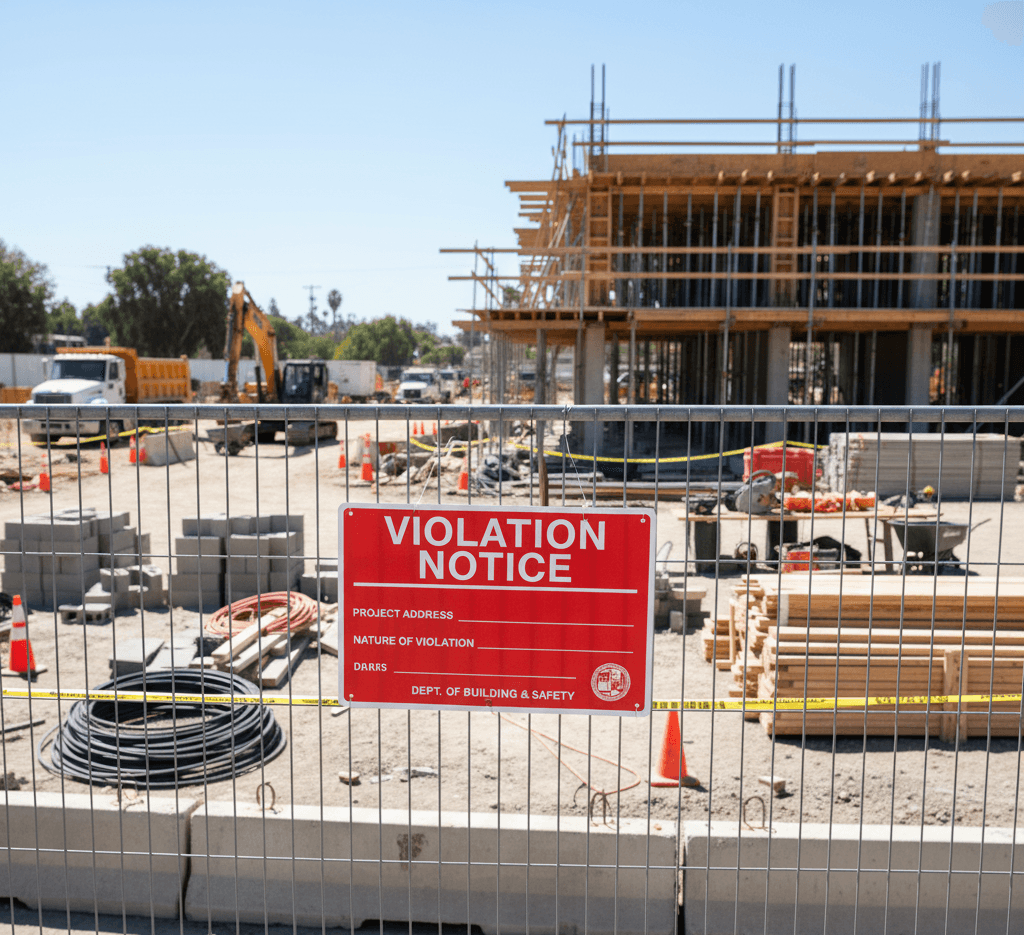
A notice of violation for unpermitted work is stressful, but it has a defined way out. Whether it is a garage conversion, an addition, a deck or a remodel done without permits, the path to resolution is the same: find out what is actually there, show that it meets code, and get it permitted. Studio MOTH has completed hundreds of permitted projects in Los Angeles, and a violation follows the same process as any other project. What changes is the clock.
Why acting quickly matters
Every city handles violations a little differently, but the pattern is consistent: the longer a violation sits with no progress, the more it costs. A notice usually comes with a compliance deadline. Miss it, and many cities add fees or penalties, sometimes charged per day, and may record the notice or place a lien against the property. The current owner is generally responsible for fixing the problem, even when a previous owner or tenant did the work.
The same systems also reward documented progress. As two examples, the Los Angeles Department of Building and Safety says a non-compliance fee may be suspended when you are working diligently and the inspector agrees (LADBS). In San Diego, penalties stop accruing once the required work is complete, and hearing officers can tie penalty relief to meeting set deadlines (City of San Diego). Showing the city that you have taken real steps is not just good manners. It is how you keep costs from growing.
Rules, deadlines and fees depend on where your property is, so always start with what your notice says.
Step 1: Read the notice and sort what needs a permit
Start by sorting the items on the notice into two groups: work that needs a permit, and work that does not. Some items, such as removing unpermitted construction and restoring the building to its approved condition, can often be corrected directly. Then contact the inspector or code enforcement officer named on the notice and confirm exactly what is required and by when.
Check zoning early. Some unpermitted work cannot be permitted as built because of rules on setbacks, height, density, parking or use. Knowing that before you spend money on drawings changes your options.
Step 2: Hire an architectural designer early
The person on the other end of your submittal reviews a very large number of plans. A designer who has taken hundreds of projects through the permit process knows what reviewers expect to see on the first submittal, how comments are usually resolved, and how to present existing conditions clearly. Most Studio MOTH projects pass plan check in just 1–2 cycles.
Hiring a professional early also shows the city you have taken the notice seriously, which matters when you ask for more time.
Step 3: Find out how it was built
You cannot prove compliance until you know what is actually there. We start with an on-site visit to measure the existing conditions and document how the work was built: floor plan, framing, electrical, plumbing, egress, ceiling heights, and where the structure sits on the lot.
We also pull the property’s permit history, plot plans and certificate of occupancy, or whatever records your jurisdiction keeps. These show what was legally established, which is the baseline the city compares your property against.
Step 4: Show what code requires, and prove compliance
Next, we match what was built against the codes that apply to it. This code analysis answers the question the city is really asking: does this meet code, and if not, what has to change?
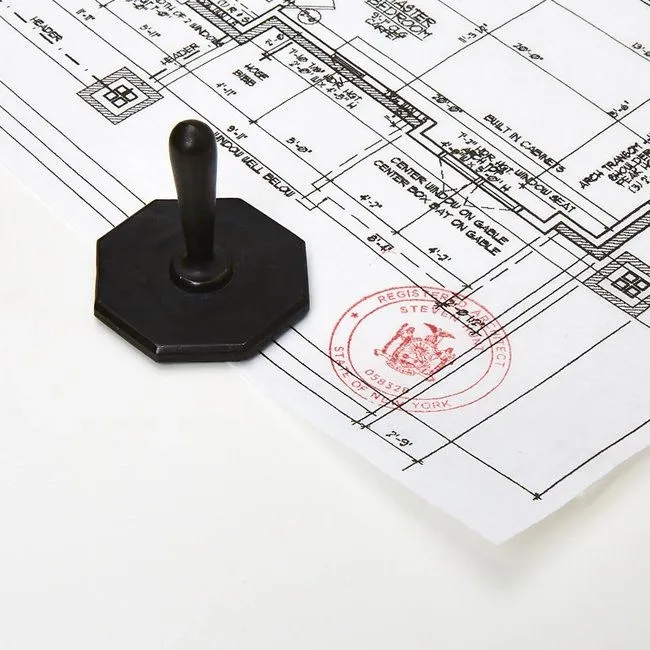
Common items include egress windows, smoke and carbon monoxide alarms, electrical and plumbing corrections, structural connections, energy compliance, fire separation, and setback or height issues. Where engineering is needed, we coordinate with licensed engineers so the drawings carry the stamps the city expects.
The result is a set of as-built drawings, plus plans for any corrections, that show the city exactly how the property meets code.
Step 5: Submit, communicate and finish inspections
With drawings ready, we submit for permits to legalize or correct the work. Stay in contact with the inspector throughout. If more time is needed, request an extension in writing before the deadline passes, not after. Once permits are issued and the work is complete, final inspections close the violation.
Talk to us about your notice
If you have received a notice of violation, send us the notice and the property address. We will tell you what to expect, then measure what was built and take it through permits to clear the violation. Send us your notice or call 818-237-8741.
This article is general information, not legal advice. If your case involves court proceedings or liens, consult an attorney.